
In this story
Pointed and rounded flats may share a place in a shop’s navigation while doing slightly different work in an outfit. One extends the line of the foot; the other creates a softer ending beneath a hem. Choosing between them is easier when you compare complete outfits and practical fit requirements together.
Start with the clothes in rotation
Choose two trousers and one dress or skirt that you already wear often. Include the widest trouser leg and the most frequently used hem length. These pieces create a more useful comparison than an outfit assembled around a new shoe simply because it looks good in a product photograph.
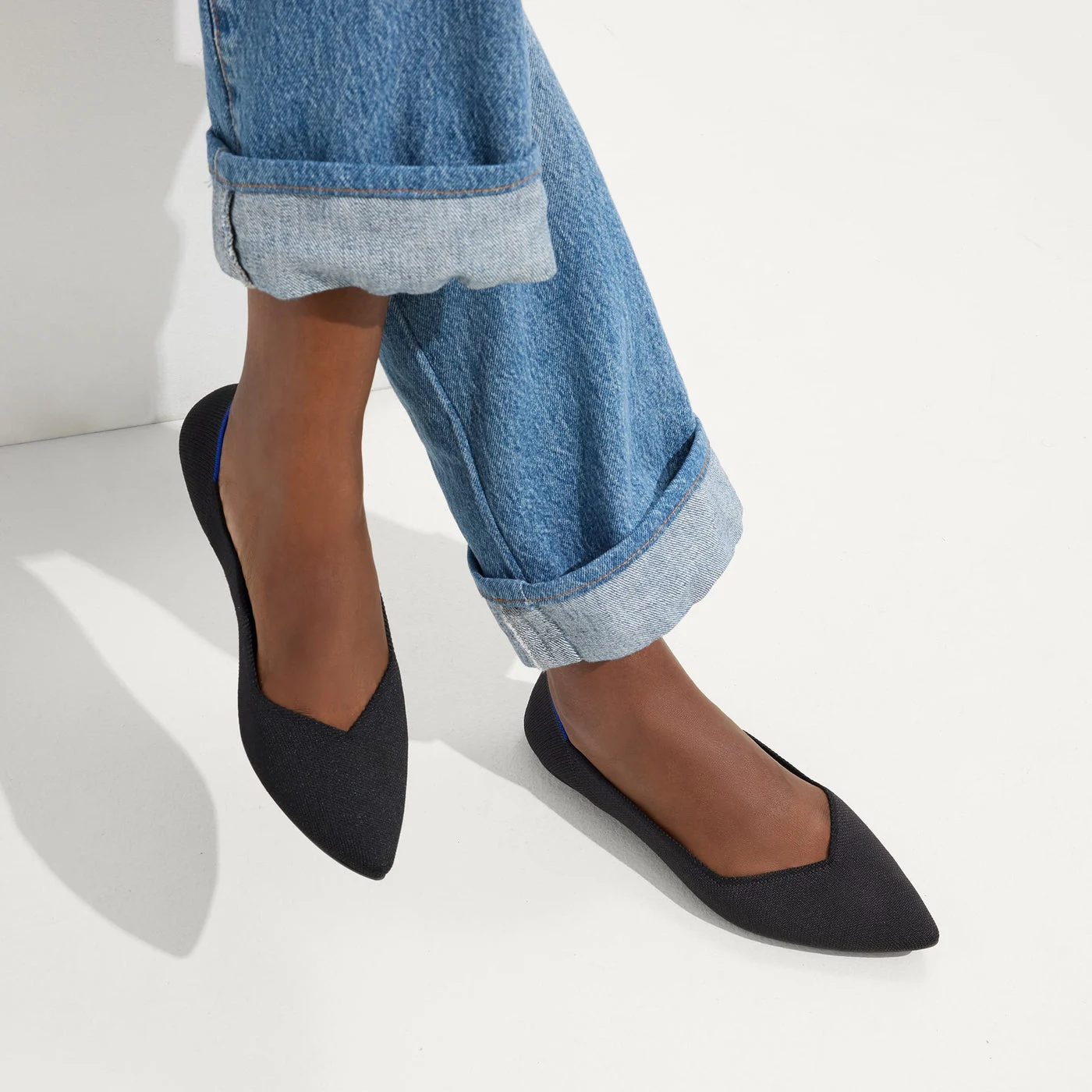
Look at how much of the shoe remains visible. A full-length trouser may show only the toe, while a cropped leg exposes the opening and heel as well. That changes which details matter visually. A distinctive toe can be effective without needing the entire shoe to be on display.
What a pointed shape changes
A pointed flat such as Rothy’s Point II creates a longer outline below the trouser leg. It can give a simple outfit a more tailored finish without adding a heel. Compare the effect with clothes you own rather than assuming that pointed automatically means formal or difficult to wear.
Keep toe shape and usable space as separate questions. A pointed exterior does not tell you how the front of the shoe accommodates your foot. Check the model’s width options and fit guidance, then assess both feet during a suitable indoor try-on. Appearance should not require persistent pressure or cramped toes.
Explore Rothy’s Point IIWhat a rounded shape changes
A rounded flat such as Allbirds’ Tree Breezer gives a softer ending to a straight trouser or simple dress. The knitted upper and close collar contribute to that impression. A plain color can make the shoe a quiet part of an outfit while leaving shape as the main difference from a pointed pair.
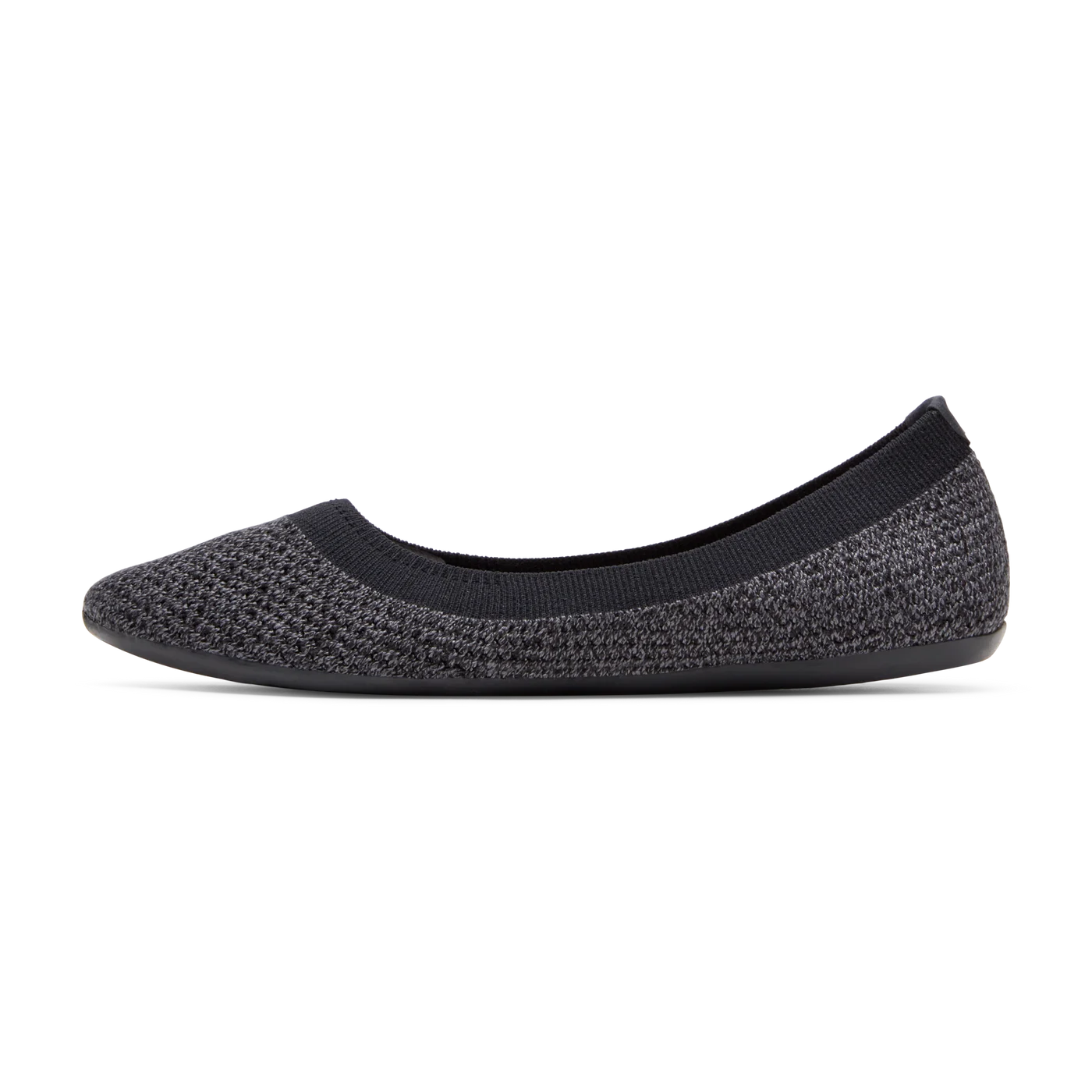
Check heel hold and the opening around the foot, not only toe room. A flat that slips during ordinary steps can be frustrating even when it feels soft at first. The actual fit depends on your feet and the exact model, so a styling preference should remain provisional until that check is complete.
Choose one useful role first
Think about the distance you walk, the surfaces on your route and how the shoes will be cleaned. Read each model’s care instructions independently, especially when the materials differ. Neither a pointed nor a rounded outline establishes weather protection or a particular support level.
If both shapes appeal, begin with the one that works with more existing outfits and fills the clearest gap. You can learn whether a second pair would add something after wearing the first in your routine. A considered shoe rotation grows from repeat use, rather than the need to own every neutral variation.
Explore Allbirds Tree BreezerPointed or Rounded Flats? Let the Trouser Hem Help Decide
Explore the details, current availability and pricing directly at Rothy’s.
Explore Rothy’s Point II